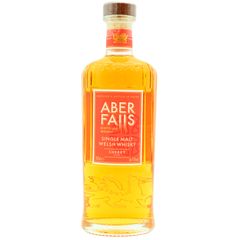
One of the most important developments in the whisky world over the past few decades has been the rise of new whisky-producing territories. What once looked like a category dominated by a handful of established nations has become far more international and diverse. Across Europe, distilleries have multiplied in countries such as France, Belgium, Germany, the Nordic countries and Spain, while beyond Europe whisky production has expanded strongly in India, Australia, South Africa and New Zealand. Even within the British Isles, England and Wales are now firmly part of the modern whisky map rather than mere curiosities at its edge.
One reason these newer whisky territories have attracted so much attention is that many of them have developed outside the weight of older local traditions and, in some cases, with fewer prescriptive production rules than those that govern categories such as Scotch or Irish whiskey. That freedom has often encouraged experimentation in raw materials, still types, cask regimes and maturation styles. Many of these distilleries are also relatively small, which can make them more agile and more willing to take risks. The results are uneven, as innovation often is, but at their best they have broadened the flavour vocabulary of whisky and challenged long-held assumptions about what whisky should look, smell and taste like.
It is probably less useful now to speak of an established “big five” set of whisky-producing territories, because the global whisky landscape is far more crowded and more interconnected than it was even fifteen years ago. Scotland, Ireland, the United States, Canada and Japan remain the best-known historic centres, but they no longer have the field to themselves. World whisky is no longer a sideline to the traditional categories: it has become one of the liveliest and most inventive parts of the modern spirits industry.